

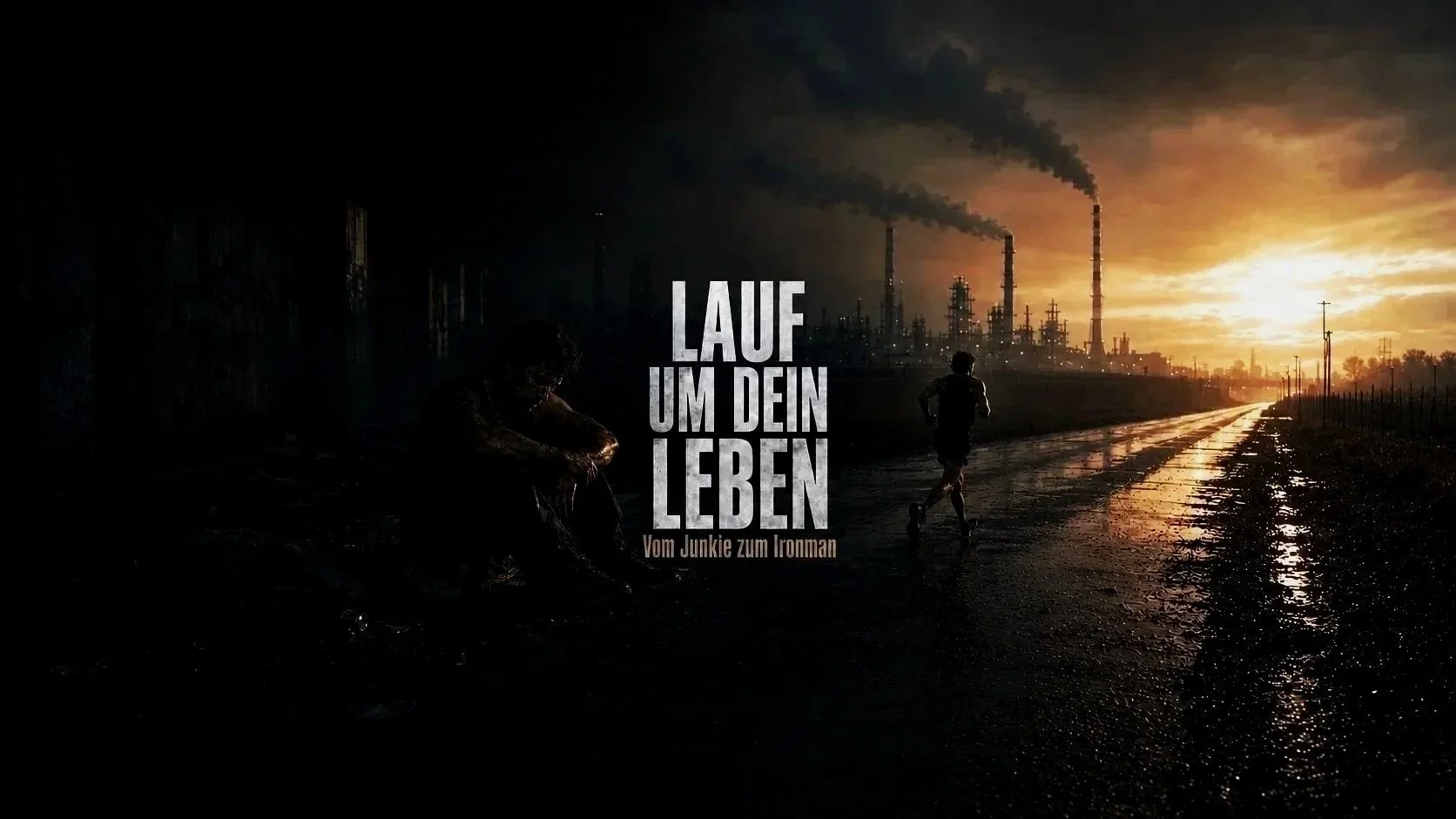
THE HEART OF THE FILM
In the industrial heart of the Ruhr, Andreas is young, restless and searching for an escape from a life he cannot bear. Heroin seems to offer freedom. Instead, it takes control — threatening his love, his family and ultimately his life.
At rock bottom, survival begins with a single step. Then another.
Based on the extraordinary true story of Andreas Niedrig, LAUF UM DEIN LEBEN – VOM JUNKIE ZUM IRONMAN is not a film about athletic triumph. It is an uncompromising drama about addiction, self-destruction and the painful struggle to reclaim one’s life. Running cannot erase Andreas’s past. But it may give him a future worth fighting for.
Released theatrically in 2008, the film marked Adnan G. Köse’s feature-film debut as both screenwriter and director.
Key Film Details
Year: 2007
Production Country: Germany
Filming Locations: Germany, the Netherlands & Spain
Screenplay & Director: Adnan G. Köse
Co-Writer: Fritjof Hohagen
Producers: Fritjof Hohagen & Clarens Grollmann
Production: Enigma Film in co-production with Odeon Film Cinematography: James Jacobs Editing Alexander Dittner
Screenplay Funding: FilmFernsehFonds Bayern
Production Funding: Kuratorium junger deutscher Film, FilmFernsehFonds Bayern, Filmstiftung NRW & FFA
Cast: Max Riemelt, Uwe Ochsenknecht, Jasmin Schwiers, Axel Stein, Robert Gwisdek and others
German Theatrical Release: 24 April 2008
Theatrical Distribution: Kinowelt Filmverleih (now STUDIOCANAL)
Format: 35 mm, 2.35:1 Scope
Running Time: 102 Minutes
Genre: Biographical Drama
LAUF UM DEIN LEBEN
ADNAN G. KÖSE’S FEATURE FILM DEBUT
Germany · 2008 · 102 min · 35mm · CinemaScope
Lauf um dein Leben – Vom Junkie zum Ironman tells the true story of world-class triathlete Andreas Niedrig: a journey from heroin addiction and self-destruction to one of the most demanding endurance sports in the world.
Starring Max Riemelt, Jasmin Schwiers, Uwe Ochsenknecht, Axel Stein and Robert Gwisdek, the film marked Adnan G. Köse’s debut as a feature-film writer and director.
FROM JUNKIE TO IRONMAN
At the centre of the film is a contradiction.
Andreas Niedrig does not simply leave an extreme life behind. He replaces one form of extremity with another: the destructive obsession of addiction gives way to the discipline and physical obsession of endurance sport.
The film moves between two cinematic worlds: the dark, industrial Ruhrgebiet of the drug years and the increasingly expansive world of running, training and triathlon.
It is both a drug drama and a sports film — but ultimately a story about whether a human being can fundamentally change without losing the forces that once drove him towards self-destruction.
A FILM THAT TRAVELLED
Following its German theatrical release, Lauf um dein Leben began an international journey under the title Run for Your Life! – From Junkie to Ironman.
Represented internationally by Beta Cinema and presented abroad through German Films, the film travelled from the international film market in Cannes to screenings and festivals in New York, São Paulo, Paris and Turkey.
At the Marché du Film in Cannes, Beta Cinema presented Run for Your Life! as one of its market premieres.
In New York, the film was screened at Tribeca Cinemas as part of a German Films presentation.
At the 32nd Mostra Internacional de Cinema de São Paulo, the film screened under the Portuguese title Corra por sua vida! – De Junkie a Ironman.
In Paris, it was presented at the Festival of German Films.
And in Turkey, the film reached another international audience through presentations of German cinema — a particularly resonant encounter for a German filmmaker with Turkish roots.
INTERNATIONAL JOURNEY
CANNES
Marché du Film
Market Premiere · Beta Cinema
NEW YORK
German Films
Tribeca Cinemas
SÃO PAULO
32nd Mostra Internacional de Cinema de São Paulo
TURKEY
German Cinema Presentations
German Films
PARIS
Festival of German Films
GERMANY
Theatrical Release · Kinowelt
SchulKinoWochen · Educational & Special Screenings
PRESS & ARCHIVE
Nearly two decades later, the contemporary press coverage, festival documents and international material tell their own story.
Reviews, festival reports, photographs and documents from Germany and abroad trace the journey of Lauf um dein Lebenfrom its theatrical release through Cannes, New York, São Paulo, Turkey and Paris — and into years of school screenings, special presentations and discussions.
What began as a first feature continued to find audiences long after its original release.
THE VIEW FROM TURKEY
The screenings in Turkey gave the film another dimension.
Although Lauf um dein Leben tells the story of a German athlete deeply rooted in the Ruhrgebiet, its themes proved universal: addiction and recovery, family and loyalty, discipline, determination and the possibility of beginning again.
The Turkish reception also brought another perspective into focus: the film had been written and directed by a filmmaker with Turkish roots, telling a distinctly German story with some of the country’s most established actors.
For a film about crossing seemingly impossible boundaries, its journey between cultures became part of its own story.
BEYOND THE THEATRICAL RELEASE
The life of Lauf um dein Leben did not end with its regular cinema run.
The film became part of the SchulKinoWochen and continued to be screened for young audiences in cinemas across Germany. Screenings were accompanied by discussions about addiction, responsibility, family, resilience and the possibility of changing one’s life.
The film was used in an educational context for subjects including German, biology, religion and ethics, social studies and film education.
Through school screenings, special events and discussions, Lauf um dein Leben developed a second life beyond its original theatrical release — not simply as entertainment, but as a film used to open conversations about addiction and recovery.
VOICES
“Moments of great drama as well as light-hearted comedy.”
Rhein-Zeitung
“In the end, the film is as oppressive as its subject matter demands.”
Rhein-Zeitung
“Give up? Never!”
epd Film
“A drug drama with the courage for big emotions.”
Süddeutsche Zeitung
“A gripping anti-drug plea.”
Der Spiegel
PRESS & ARCHIVE
Nearly two decades later, the contemporary press coverage, festival documents and international material tell their own story.
Reviews, festival reports, photographs and documents from Germany and abroad trace the journey of Lauf um dein Lebenfrom its theatrical release through Cannes, New York, São Paulo, Turkey and Paris — and into years of school screenings, special presentations and discussions.
What began as a first feature continued to find audiences long after its original release.
LAUF UM DEIN LEBEN
VOM JUNKIE ZUM IRONMAN
Directed by
Adnan G. Köse
Written by
Adnan G. Köse & Fritjof Hohagen
Starring
Max Riemelt
Jasmin Schwiers
Uwe Ochsenknecht
Axel Stein Udo Schenk
Robert Gwisdek Ismail Deniz
Director of Photography
James Jacobs
Produced by
enigma film
German Distributor
Kinowelt
International Sales
Beta Cinema
Germany · 2008 · 102 min · 35mm · CinemaScope
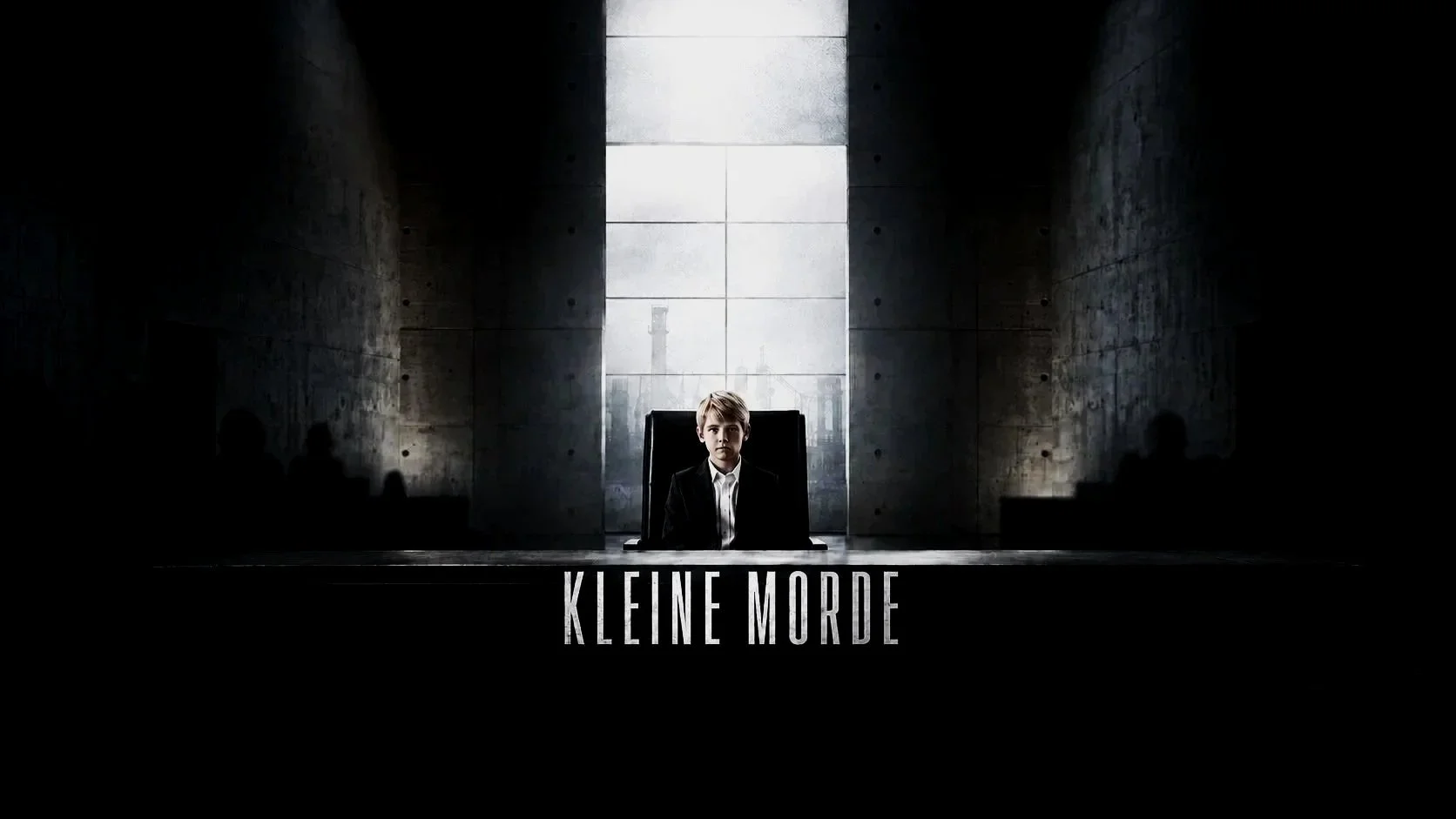
THE HEART OF THE FILM
Germany in the near future. Faced with rising youth crime, the state has abolished the minimum age of criminal responsibility. Children accused of serious crimes can now be tried and punished as adults.
When Martin, the highly intelligent twelve-year-old son of a respected judge, is accused of murder, he becomes the first test case of this new justice system. Defence lawyer Julia Corner takes on his case — and enters a world of media hysteria, buried secrets and adults whose certainties begin to collapse.
KLEINE MORDE is a psychological thriller about guilt, punishment and a society that may have abandoned its children long before it puts them on trial.
KEY FILM DETAILS
Production Year: 2012
Production Country: Germany
Filming Locations: North Rhine-Westphalia / Ruhr Area
Genre: Psychological Thriller
Running Time: 94 Minutes
Format: 35 mm, Scope
Written & Directed by: Adnan G. Köse
Co-Writer: Michael Lentz
Producers: Neslihan Duy, Eyyüphan Duy & Adnan G. Köse
Production Company: SteelWorX Film Production, founded by Neslihan Duy and Eyyüphan Duy
Cinematography: James Jacobs
Editing: Manuel Reidinger
Cast: Paul Falk, Ann-Kathrin Kramer, Uwe Ochsenknecht, Günther Kaufmann, Udo Schenk, Jimi Blue Ochsenknecht, Jasmin Schwiers and others
Project Origin: Initiated by Adnan G. Köse and based on his original screenplay KLEINE MORDE, winner of the 1994 North Rhine-Westphalia Screenplay Award and subsequently supported with screenplay funding by Filmstiftung NRW. The screenplay was later developed with co-writer Michael Lentz — Köse’s mentor and, at the time, professor at the Academy of Media Arts Cologne.
Production Funding: Film- und Medienstiftung NRW & German Federal Film Fund (DFFF)
German Theatrical Release: 20 September 2012
Theatrical Distribution: STUDIOCANAL
VOICES
“Mut hat Adnan G. Köse mit seinem zumindest im deutschen Kino eher ungewöhnlichen Genreszenario ohne Frage bewiesen.”
Filmstarts
“Der Streifen beweist immerhin, dass im deutschen Düsterfilm nicht immer gleich Zombies und Splatter vonnöten sind, um hier und da ein wenig zu schockieren und gleichermaßen mit einem gewissen Anspruch zu unterhalten.”
OFDb
“Handwerklich stimmig, in stilvolle Farbgebung eingebunden und mit einer recht versierten Kamera eingefangen.”
OFDb
A FILM THAT POLARISED
Kleine Morde did not seek consensus.
Its German theatrical release provoked sharply divided reactions.
Some critics rejected its mixture of dystopia, psychological drama and genre cinema. Others recognised precisely the ambition and unusual nature of that approach.
Even one of the film’s harshest contemporary reviews acknowledged the courage behind an unusual genre scenario for German cinema.
Other responses highlighted its atmospheric photography, performances and willingness to explore darker territory rarely approached by German genre films.
The film divided opinion.
Then came Lyon.
FROM SCRIPT TO SCREEN
1994/95
Screenplay Award · North Rhine-Westphalia
2011
Production
2012
World Premiere · Lichtburg Oberhausen
20 September 2012
German Theatrical Release
2013 · LYON
Silver Horse · Best Film
Silver Horse · Best Director
Silver Horse · Best Screenplay
THE RUHRGEBIET
Although Kleine Morde takes place in a fictional near future, much of its visual world came from very real places.
The production returned to the Ruhrgebiet and to locations connected with the filmmakers’ own histories.
Schools, industrial landscapes and public architecture became part of a dystopian world in which institutions appear monumental while the people inside them become increasingly isolated.
The Oberhausen Town Hall, used as one of the film’s central locations, gave the courtroom story an architectural severity that became part of the film’s visual identity.
KLEINE MORDE
A FILM ABOUT GUILT, CHILDHOOD AND A SOCIETY WITHOUT INNOCENCE
Germany · 2012 · 94 min · Psychological Thriller
A child is murdered.
The accused is another child.
Set in a near future in which Germany has abolished the age of criminal responsibility, Kleine Morde follows 13-year-old Martin Brinkhoff, the highly intelligent son of a respected judge, as he becomes the first child to stand trial for murder.
Star attorney Julia Corner takes his defence.
But the closer she gets to her young client, the more disturbing the question becomes:
Is she defending a child — or a murderer?
A STORY THAT WAITED ALMOST TWO DECADES
The history of Kleine Morde began long before the cameras started rolling.
Adnan G. Köse’s screenplay received the Screenplay Award in North Rhine-Westphalia in the mid-1990s.
Yet the film would not be made for almost two decades.
What eventually reached cinemas was conceived not simply as a murder mystery, but as a psychological and moral confrontation with guilt and responsibility.
What happens when a society increasingly demands performance from its children, while simultaneously withdrawing emotional responsibility for them?
And at what point does innocence end?
A GERMAN PSYCHOLOGICAL THRILLER
Kleine Morde deliberately moves between genres.
Courtroom drama.
Psychological thriller.
Murder mystery.
Dystopia.
At its centre stands Martin Brinkhoff — played by Paul Falk — a highly intelligent child whose apparent vulnerability increasingly collides with the possibility of manipulation and violence.
Around him is an ensemble including Ann-Kathrin Kramer, Uwe Ochsenknecht, Jimi Blue Ochsenknecht, Udo Schenk, Jasmin Schwiers and Günther Kaufmann in his final film role.
The film was shot in North Rhine-Westphalia, using locations including the monumental Oberhausen Town Hall and places from the Ruhrgebiet that had formed part of the filmmakers’ own past.
LYON 2013
SILVER HORSE CINEMA & MUSIC AWARDS
In 2013, Kleine Morde received three Silver Horse Awards in Lyon:
BEST FILM
BEST DIRECTOR
Adnan G. Köse
BEST SCREENPLAY
Adnan G. Köse
Almost two decades after the screenplay had received its first award, the story was honoured once again — this time as a completed film.
PRESS & ARCHIVE
The story of Kleine Morde is also the story of a screenplay that refused to disappear.
First recognised in the 1990s, finally produced almost two decades later, controversially received upon its German theatrical release — and subsequently awarded three times in Lyon.
Contemporary reviews, production photographs, screenplay documents, festival material and images from the premiere trace that long journey from page to screen.
KLEINE MORDE
Written & Directed by
Adnan G. Köse
Starring
Paul Falk
Ann-Kathrin Kramer
Uwe Ochsenknecht
Jimi Blue Ochsenknecht
Udo Schenk
Jasmin Schwiers
Günther Kaufmann
Director of Photography
James Jacobs
Music
Philipp F. Kölmel
Editing
Manuel Reidinger
Production
SteelWorX Film
German Distribution
StudioCanal
Germany · 2012 · 94 min
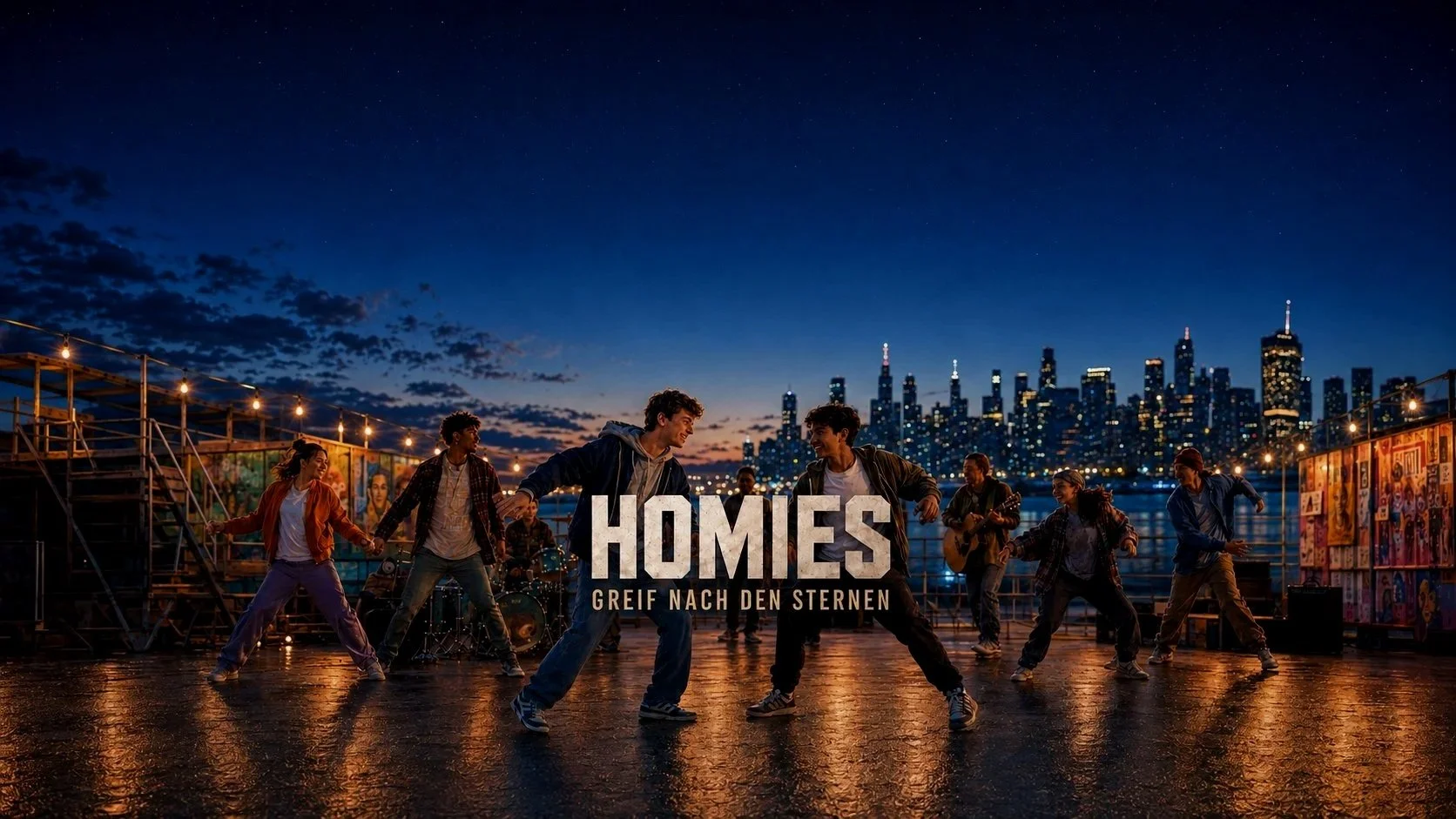
THE HEART OF THE FILM
Marvin is eighteen and has everything others dream of — except the freedom to decide who he wants to become. His successful mother has already planned his future, but Marvin’s real passion belongs to music and dance.
When he meets Osman, Stella and their friends, he enters a world far removed from his privileged upbringing. For the first time, he feels respected for who he is rather than for where he comes from. But afraid of losing this new sense of belonging, Marvin hides the truth about his life — and puts everything he has found at risk.
HOMIES – GREIF NACH DEN STERNEN is a vibrant coming-of-age musical about friendship, first love and the courage to follow your own path. Because reaching for the stars begins with finding the confidence to stand by who you truly are.
KEY FILM DETAILS
Production Year: 2010
Production Country: Germany
Filming Location: Frankfurt am Main
Genre: Children’s & Family Musical / Coming-of-Age Film
Running Time: 95 Minutes
Format: 35 mm, 1.85:1
German Rating: FSK 0
Directed by: Adnan G. Köse
Screenplay by: Adnan G. Köse & Andrea Kriegl Cinematography: James Jacobs
Editing: Manuel Reidinger
Producers: Fritjof Hohagen & Clarens Grollmann
Production: Enigma Film & Starhaus Filmproduktion
In Co-Production with: Odeon Film
Cinematography: James Jacobs
Editing: Manuel Reidinger
Music: Tai Jason
Choreography: Detlef D! Soost & Rafael Antonio
Cast: Jimi Blue Ochsenknecht, Sabrina Wilstermann, Ismail Deniz, Ali Murtaza, Selina Shirin Müller, Günther Kaufmann, Ann-Kathrin Kramer, Detlef D! Soost and others
Production Funding: FFA, German Federal Film Fund (DFFF) & Hessen Invest Film
German Theatrical Release: 18 August 2011
Theatrical Distribution: Kinowelt Filmverleih (now STUDIOCANAL)
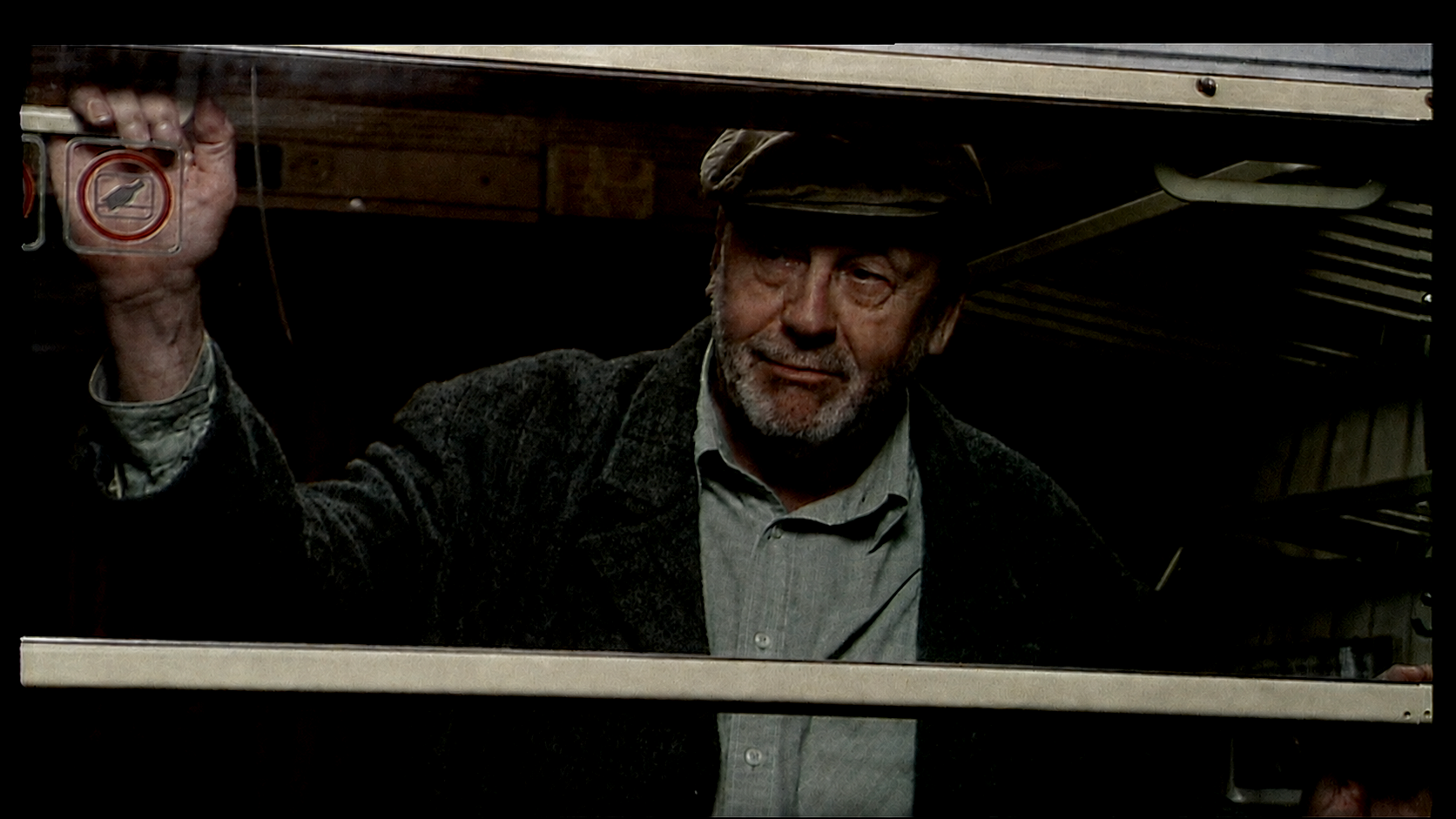
MEIN GROSSER FREUND
THE HEART OF THE FILM
Martin is a seriously ill prisoner who has escaped from a prison hospital. Balou is a young runaway who, after the death of his mother, has fled the orphanage to search for his Turkish father.
Their encounter brings together two people who could hardly be more different. Martin initially tries to escape not only the police, but also the unfamiliar responsibility the boy places upon him. Yet as they travel together, distance slowly gives way to trust — and a man with little time left becomes the first person to give Balou the sense that he is no longer alone.
MEIN GROSSER FREUND is not primarily a story about crime or escape. It is a tender, modern-day road movie about an unlikely friendship, the courage to accept responsibility and a lost child’s search for belonging, a father and a new family.
KEY FILM DETAILS
Production Year: 1998
Production Country: Germany
First Broadcast: 30 April 1999 on ARTE
Broadcasters: ARD / WDR / ARTE
Genre: Road Movie / Drama
Running Time: 87 Minutes
Screenplay by: Adnan G. Köse
Directed by: Marianne Lüdcke
Producers: Sytze van der Laan & Thomas Eckelkamp
Production Company: filmpool Film- und Fernsehproduktion
Cinematography: Benedict Neuenfels
Cast: Günter Lamprecht, Hannelore Elsner, Rafael Ghobadlo and others
Alternative Broadcast Title: MEIN FREUND BALOU
Project Origin: MEIN GROSSER FREUND marked Adnan G. Köse’s debut as a screenwriter. He wrote the screenplay specifically for Günter Lamprecht, who read it on a return flight from the United States and immediately agreed to play the leading role. The film became Lamprecht’s final major production alongside the unforgettable Hannelore Elsner.
Award Recognition: Nominated for Best Cinematography at the 1999 German Television Awards — Benedict Neuenfels
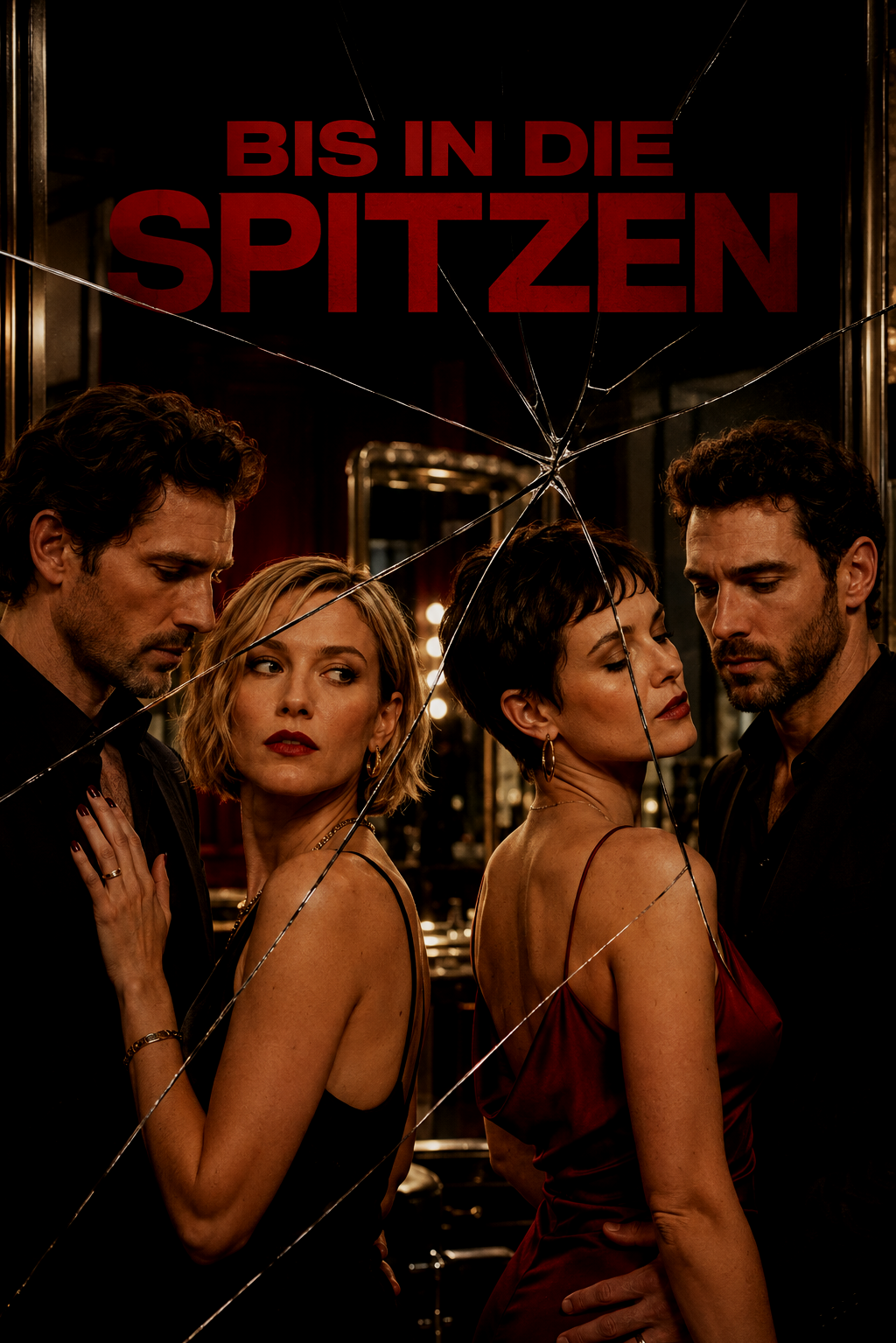
A German adaptation of the acclaimed BBC drama series CUTTING IT.
Berlin. Two hair salons face each other across the street. But behind mirrors, scissors and perfect appearances, a far more dangerous rivalry unfolds — about love, desire, jealousy, loyalty and the question of how much of a life can survive when old passions return.
In 2005, German producer Eberhard Joost approached Adnan G. Köse to adapt the BBC series CUTTING IT for German television — with the creative freedom to translate more than just its language. From this initial development grew a team of writers and directors who reimagined the material for Berlin and created BIS IN DIE SPITZEN for SAT.1.
Rather than simply reproducing the British original, the German version developed its own characters, rhythm and emotional world. At its centre are Niki and Philipp, a married couple running a successful salon, whose seemingly settled life is thrown into turmoil when Niki’s former lover Finn returns — accompanied by his wife Mia, who opens a competing salon directly across the street.
Adnan G. Köse contributed three episodes to the 13-part drama series.
Although its original television run lasted only one season, BIS IN DIE SPITZEN found an enduring audience beyond its first broadcast and became a distinctive part of German television drama of the mid-2000s.
For Adnan G. Köse, the series also marked an important chapter as a screenwriter: the experience of taking an established international format and finding a new voice, a new cultural setting and a life of its own.
BIS IN DIE SPITZEN
OPENING TITLES — “BIS IN DIE SPITZEN” (Cutting it)
SELECTED SCENES — “BIS IN DIE SPITZEN (Cutting it)
Screenplay: Adnan G. Köse et al.
Director: Erwin Keusch
A SHORT CHRONICLE OF MURDER
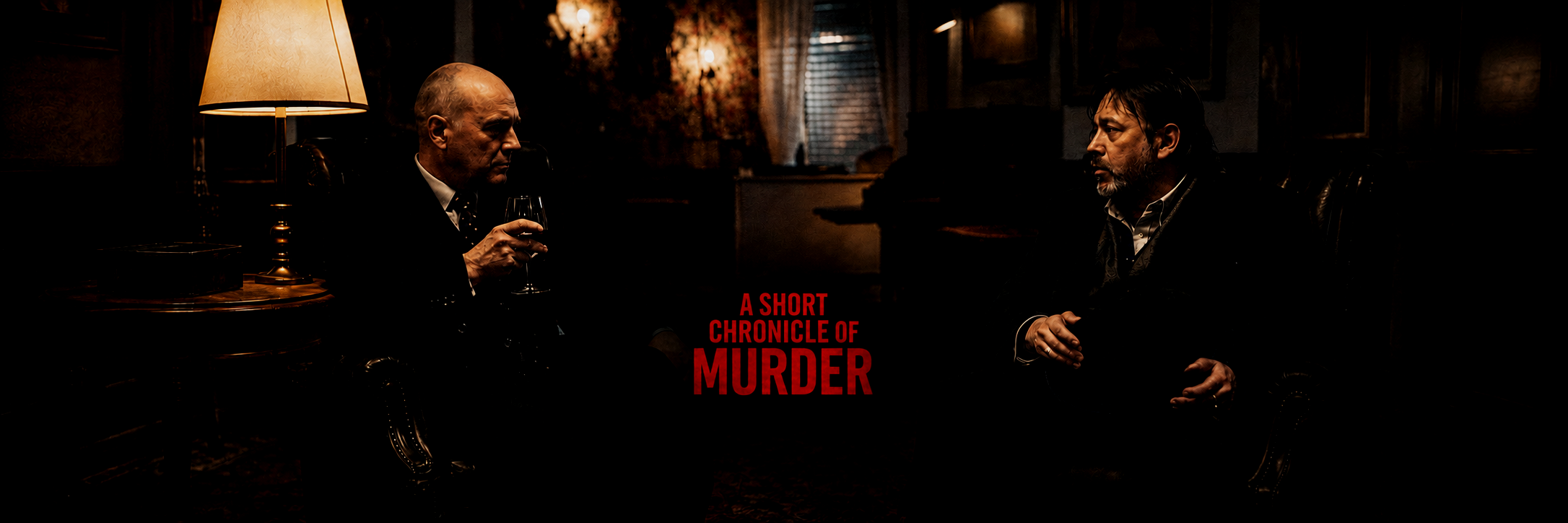
Germany, 1984: Late one evening, Walther Loose, a respected and wealthy citizen, opens his door to a stranger named Leonard. The man carries a single accusation: he claims Walther was once an SS guard responsible for unspeakable crimes in a concentration camp. Walther denies everything. He calls the allegation madness, a grotesque mistake. But Leonard does not leave.
What begins as an uncomfortable visit quickly turns into a psychological siege. Leonard knows details he should not know. He speaks of faces, names, routines – fragments of a past Walther insists never existed. The house becomes a sealed arena where every question tightens the noose and every answer sounds like a confession.
As the night deepens, fear replaces civility. Leonard’s calm masks something unpredictable; Walther’s composure begins to crack. Is this a survivor hunting his tormentor, or a dangerous impostor driven by obsession? The balance of power shifts minute by minute, turning the living room into an interrogation chamber and the two men into hunter and prey.
With no witnesses and no escape, truth becomes a weapon. Guilt, memory, and identity collide in a merciless duel that pushes both men toward violence. By dawn, one of them will be exposed – and the other will pay the final price.
A SHORT CHRONICLE OF MURDER is a tense, claustrophobic thriller about revenge, deception, and the inescapable return of the past. Directed by Jochen Isensee, starring Adnan G. Köse as Leonard (also screenwriter and producer) and Hannes Liebmann as Walther Loose.
KEY FILM DETAILS
YEAR
2020 · Remastered in 2024
PRODUCTION
New Dakota Studios
DIRECTOR
Jochen Isensee · Directorial Debut
WRITTEN & PRODUCED BY
Adnan G. Köse
CAST
Adnan G. Köse as Leonard
Hannes Liebmann as Walther Loose
DIRECTOR OF PHOTOGRAPHY
Stefan Isensee
CAMERA SYSTEM
RED Dragon
FILMED IN
Baden-Württemberg, Germany
SUPPORTED BY
City of Freiburg · Cultural Affairs
FESTIVALS & AWARDS
Selected for more than 30 international film festivals and winner of numerous awards, including Best Film, Best Screenplay and Best Actor.
More films to come
Additional films and productions will be added over time.